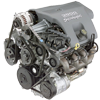
engine_details:engine_internals
Differences
This shows you the differences between two versions of the page.
| Both sides previous revisionPrevious revisionNext revision | Previous revision | ||
| engine_details:engine_internals [2020/03/30 17:43] – ben | engine_details:engine_internals [2020/04/13 15:36] (current) – ben | ||
|---|---|---|---|
| Line 1: | Line 1: | ||
| - | ====== Internal | + | ====== Internal |
| - | **This page is just a skeleton for now** | + | Basic Details |
| - | L36 vs L67 vs L32 vs L26\\ | + | Since we know that the engine blocks between all of the series 2 and series 3 3800's are largely identical we can forget about that and focus on the internal components where a lot of the differences |
| - | - connecting rods\\ | + | |
| - | [[https:// | + | |
| - | - pistons\\ | + | |
| - | - flywheels | + | |
| - | journal sizes\\ | + | ===== Valvetrain ===== |
| - | [[https:// | + | |
| - | Stroking/Boring options | + | [[: |
| + | |||
| + | [[: | ||
| + | |||
| + | ===== Connecting Rods ===== | ||
| + | |||
| + | [[https:// | ||
| + | |||
| + | ==== Series 2 vs Series 3 ==== | ||
| + | |||
| + | Series 3 engines all utilized powdered metal connecting rods, however the series 2 rods were cast metal. There is some debate as to which material is stronger though. | ||
| + | |||
| + | The series 3 powdered metal rods dont have the weight variance that cast do, save time/ | ||
| + | powdered metal rods are brittle so they can machine the big end bore and bolt holes then crack the cap off (no more machining 2 separate components to mate then final machine big end)\\ | ||
| + | the fractured cap also means the cap is self aligning, this is a good thing but the material being brittle to accomplish this means the material may not be very strong and will shatter instead of bend at their limit. | ||
| + | |||
| + | Some will reference the series 3 rods as being stronger because they are " | ||
| + | " | ||
| + | It is not a forging in the conventional sense where a hot ingot is hot forged into the shape of a rod over multiple dies thereby giving the steel a grain structure that improves the metals strength…that is a true rod forging. | ||
| + | |||
| + | ==== L67 vs L36 ==== | ||
| + | |||
| + | The L67 and L32 have stronger connecting rods than the the L36 and L26 engines. | ||
| + | |||
| + | L36/L26 rods are longer than L67/L32 rods as well\\ | ||
| + | {{: | ||
| + | |||
| + | Below is an image of the L67 and L36 connecting rods: | ||
| + | |||
| + | {{: | ||
| + | |||
| + | The L67 rod is on the left and the L36 rod is on the right. | ||
| + | |||
| + | ==== L36(s2 NA) vs L26(s3 NA) Connecting Rods ==== | ||
| + | |||
| + | Below is an image of the L36 and L26 connecting rods. | ||
| + | |||
| + | {{https:// | ||
| + | |||
| + | The L26 rod is powdered metal, however it is slightly smaller than the L36 connecting rod. | ||
| + | |||
| + | Here is a side profile of the two: | ||
| + | |||
| + | {{https:// | ||
| + | |||
| + | The L26 rod is on the right, the L36 is on the left. | ||
| + | |||
| + | ==== | ||
| + | |||
| + | ===== Pistons ===== | ||
| + | |||
| + | L67 and L32 pistons (supercharged) are longer than L36/ | ||
| + | |||
| + | The supercharged pistons have a thicker crown and a a deeper dish. The ring lands are also moved down by 0.1" compared to the naturally aspirated engines. | ||
| + | |||
| + | Some L67 and L32 pistons received piston skirt coatings starting in 2003. This coating though seems to wear off by ~75,000 miles | ||
| + | |||
| + | ===== Resources: ===== | ||
| + | |||
| + | [[http:// | ||
engine_details/engine_internals.1585590185.txt.gz · Last modified: 2020/03/30 17:43 by ben